
For the fiscal ended 2021, the group has made a loss of Rs 5,943 crore on sales of Rs 11,723 crore, a drop of 66 per cent over fiscal 2020. The group's total debt was up by 7 per cent to Rs 20,742 crore.

Mumbai, India's financial capital, is set for a mega transformation with a massive patch of land opening up for redevelopment; a new metro railway ready to start services by the year-end; and the country's oldest railway station, the Chhatrapati Shivaji Terminus, going for modernisation with private sector participation. Work on Mumbai's second airport will start from next month, while construction of the sea link connecting central Mumbai to Navi Mumbai has already moved into a fast lane despite Covid-induced lockdowns. Also, a coastal road project, connecting Nariman Point to Worli, is under way and will help decongest the city to quite an extent. Of all these mega infrastructure projects, the one that has a huge potential to change the city's skyline is the Eastern Waterfront project - to be built on the Mumbai Port Trust (MbPT) land.

The Essel group founder, Subhash Chandra has settled 91.2 per cent of his debt with 43 lenders, and the remaining dues are in the process of being paid. "I am happy to report that we have come out of the financial stress situation by settling 91.2% of our total debt to 43 lenders in 110 accounts. "About 88.3% of the amount has been paid, while the remaining 2.9% is in the process of being paid. "We are making all the required efforts to settle the remaining 8.8% of our total debt.

Dubai-based billionaire BR Shetty has sued Bank of Baroda (BoB) and audit firm Ernst & Young (EY) in a New York court, accusing them of ignoring fictitious and fraudulent transactions that resulted in NMC Healthcare going bankrupt. Shetty is seeking $8 billion in damages in the suit that also names the top management of NMC Healthcare, and Netherlands-based Credit Europe Bank. A top NMC Healthcare official confirmed the development to Business Standard and said despite several meetings, senior BoB officials in India did not take remedial steps for fear of getting involved in an international ponzi scheme perpetrated by then senior management officials.

When Biocon chairperson Kiran Majumdar-Shaw - well known for raising issues ranging from lack of civic services in Bengaluru to climate change - decided to take on the Indian stock market regulator, the Securities and Exchange Board of India (Sebi), she forced the Indian corporate world and legal community to take notice. In an interview to Business Standard, Majumdar-Shaw called a Sebi order to impose a fine on insider trading charges against a Biocon employee and an external consultant an "Agatha Christie" fiction, which destroyed the reputation of "innocent people". "The order is pure harassment and has caused huge reputational damage to us and goes against the principles of good governance promised by this government," Mazumdar-Shaw said. "We will certainly appeal this," she added.

'The competition between the two is definitely going to be of great interest to the Indian market.'

Sanjay Kirloskar, promoter of Kirloskar Brothers, moves Supreme Court to enforce a family settlement signed in 2009.

Independent directors

With the Jaypee acquisition, the Suraksha group, which made lenders an offer of Rs 7,736 crore, will be able to expand its footprint in north India after making inroads in Mumbai's real estate market over the past year. Sudhir Valia, the promoter, was a co-founder and executive director of India's biggest pharmaceutical firm, Sun Pharmaceuticals, and is a close relative of Dilip Shanghvi.

Mukesh Ambani-owned RIL's JioMart is set to launch a slew of new products including financial services, electronics to airline tickets to take on the competition from upcoming rivals like the Tata Super app and other established players including PayTM, Amazon and Flipkart. This comes at a time when RIL's e-commerce revenues are set to grow by 35 per cent to $15 billion within four years and its core retail revenue is expected to grow at the same pace to $44 billion, as per a forecast by Goldman Sachs. "The Tata vs JioMart war will be the next big corporate battle to watch. "While Tata has an upper hand like in-house products and brands, RIL has the backing of global biggies like Google, Facebook and Microsoft," said head of a rating firm asking not to be quoted.

Direct economic stimulus measures such as tax cuts for individuals and industry would have helped to prop up the Indian economy which was hit hard by the lockdowns across several states in India, say economists and corporate leaders. While the measures announced on Monday are focussed more on the supply side, these steps would take a lot of time to move the needle for the economy.

865 million Indian adults require vaccination.

The Adani group struck first coal from its Carmichael, Australia project on Thursday and will start shipping to its customers according to schedule. With this, the project will not only lift the economic prospects of the hitherto barren Australian outback, but also help Indian power plants to source cheap coal. The project had faced protests from a section of population with several banks even refusing to fund it. The group, however, went ahead with the project which included construction of a brand new railway line connecting an Australian port to the mine -- situated 300 kilometers away in Queensland.

Some buyers are insisting on a clause in the agreement that the whole deal hinges on physical verification at a later date with some part of payment kept in escrow.

A number of listed companies are not to be found on their registered address. The stock exchange has also been unable to contact them through other means. These 50 companies had been suspended for violations for more than six months. The BSE had reached out to them with show cause notices in December 2020.

A lot of gains have been driven by foreign portfolio investors. Lower interest rates globally have forced foreign investors to seek avenues for growth. They have been net buyers to the tune of Rs 2.5 trillion over the trailing 12 months, including May, reports Sachin P Mampatta.

The regulator is more carefully scrutinising applications by infrastructure investment vehicles that have a limited number of investors. They have been asked to broaden their investor base before application approval, according to two people familiar with the matter. The Securities and Exchange Board of India is concerned about the structure being used for getting around tax requirements, according to one of the sources.

Only 10 per cent of stocks account for 93 per cent of investments.
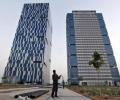
The government has been in discussions to promote such international financial services centres within India as alternatives to places like Singapore.
Discussions are said to have been heating up over how long a tax indemnity clause, which is part of such deals, should run, according to multiple people familiar with the matter.
 © 2025 Rediff.com - Investor Information - Advertise with us - Disclaimer - Privacy Policy - Sitemap - Feedback - About us - Terms of use - Grievances